
An open-plan office can be exactly what one employee needs to feel connected to a team, and exactly what makes it impossible for the person two desks along to think clearly. A meeting that one colleague finds energising, full of back-and-forth and quick thinking on the spot, can leave another needing an hour afterward just to recover and process what was said. Neither reaction is about effort or ability. It’s about how differently people process the same environment, something most workplace design has never really accounted for.
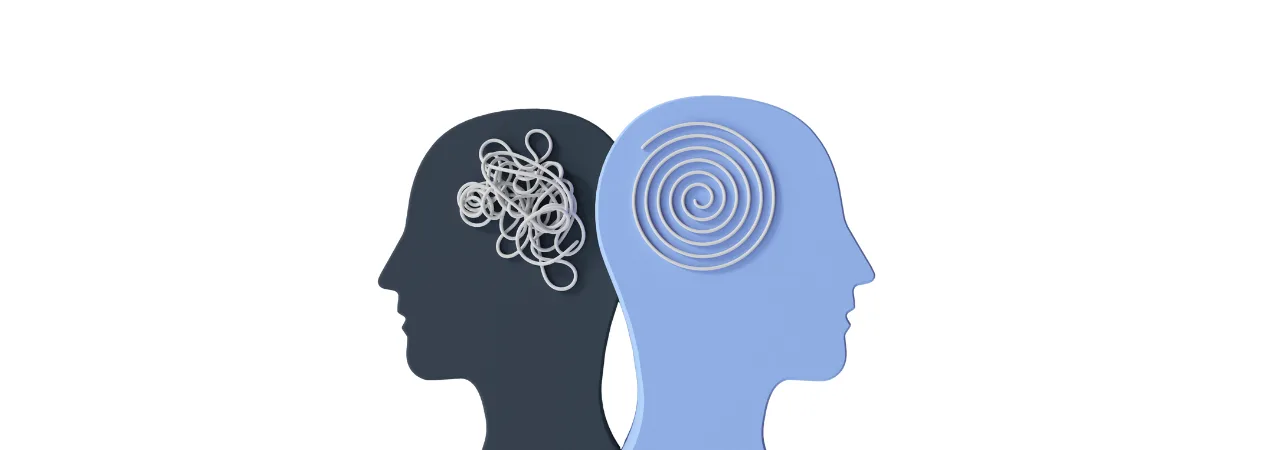
This is where neurodivergence comes in. It’s an umbrella term for the many natural ways brains process information, communicate, learn, and respond to the world. It isn’t a deficit to be accommodated around the edges of business as usual. It’s a different, equally valid way of thinking, and most workplaces, from office layouts to meeting structures, were designed without it in mind.
It’s estimated that as many as one in five people may be neurodivergent in some way, spanning conditions like autism, ADHD, dyslexia, and dyspraxia. That’s a significant proportion of any workforce, and yet most organisations still treat neurodivergence as a rare exception to plan around rather than an ordinary part of who makes up a team.
The individual figures behind that estimate are worth considering for a moment. more than one in 100 people are on the autism spectrum and ADHD is estimated to affect 3 to 4% of UK adults according to The National Institute for Health and Care Excellence (NICE). These figures are also likely to be undercounts. Many neurodivergent adults remain undiagnosed or choose not to disclose, meaning the number of people in any given workplace who could benefit from a more flexible approach is likely higher than official figures suggest.
There’s also no single experience of neurodivergence. The differences between conditions can be just as significant as the similarities, and individual needs can vary considerably even among people with the same diagnosis. What connects these experiences isn’t a shared need for one support. It’s that many workplace environments have been shaped around one way of working, with little consideration for anyone who struggles in this environment.
Understanding of neurodivergence has grown substantially in recent years, but that growing awareness hasn’t closed the gap in any consistent way. Research from NeuroBridge’s State of Neurodiversity in the Workplace report found that only 36% of UK employers currently have a formal neurodiversity policy in place, which means most neurodivergent employees are navigating their working life without any structured support to draw on at all.
Disclosure adds another layer to this, and it often starts before someone even has a job. Gallup research found that 46% of neurodivergent employees don’t ask for accommodations during the application process at all, worried it would work against them or get them labelled as difficult before they’ve even started. Even once employed, disclosure doesn’t necessarily mean the need for masking goes away. Around 45% of neurodivergent employees say they’ve told their manager or supervisor about their neurodivergence, and many still feel they must mask or camouflage who they are to appear more neurotypical day to day.
That hesitation keeps the issue invisible in a lot of workplaces, even ones that do have a policy on paper, because a policy that nobody feels safe enough to use isn’t really support.
The impact is often easier to miss than you might expect, since it doesn’t always look like a workplace issue at all. It can show up as exhaustion after a busy meeting, difficulty concentrating in a noisy office, or someone needing considerably more recovery time after a demanding day. City & Guilds’ 2025 Neurodiversity Index found that 51% of neurodivergent employees have taken time off work because of their neurodivergence, with burnout and workplace conflict cited as key contributing factors, and two in five said they encounter challenges at work most days.
Masking is a large part of what drives this. The energy spent all day managing how you come across, forcing eye contact that feels uncomfortable, or pushing through sensory discomfort rather than asking for it to change, leaves less energy for the actual work. And because that effort is designed to stay invisible, it rarely gets acknowledged or accounted for by colleagues, which makes it easier for the toll to build unseen. Over time, it tends to surface as exhaustion or burnout itself.
The effects don’t stay contained to how someone feels privately, either. When a person is using a significant amount of their energy simply to navigate their working environment, it can affect concentration and productivity long before it ever becomes an absence.
It’s tempting to assume that raising awareness through training is the fix, but the evidence doesn’t fully support that. A 2026 study by van Rijswijk found that neurodiversity awareness training had no measurable effect on closing the psychological safety gap between neurodivergent and neurotypical employees.
That doesn’t mean training is wasted. It can genuinely shift attitudes and build understanding. But attitude change on its own doesn’t guarantee a manager follows through on an agreed adjustment, or that a team culture feels safe enough to disclose it. A 2025 systematic review of workplace accommodations for autistic employees found that only a quarter of autistic adults reported receiving any workplace adjustments at all, meaning three in four went without. What’s missing isn’t training, but the follow-through that should come after it, which is exactly why the suggestions below lean toward structural, everyday changes rather than something that gets delivered once in a training session and then quietly forgotten.
None of this requires a complete overhaul of how a business operates. It requires a willingness to build in flexibility and consistency where there currently isn’t much of either, and the payoff isn’t just comfort. When someone isn’t spending most of their energy managing how they come across, that energy goes back into the actual work, which is where most of the gain in “best work” comes from.
Quiet spaces to retreat to when noise or a busy office becomes overwhelming can make a genuine difference to someone who finds a standard open-plan environment difficult to think in. Hybrid or remote options offer the same kind of relief in a different form, giving people more control over their environment on the days concentration matters most. Not every role allows for this, flexibility looks different on a shop floor or a construction site than it does behind a desk. There, it might mean a quieter welfare cabin to retreat to, written task briefings alongside verbal ones, or more say over which tasks someone is assigned.
Most neurodivergent employees still worry that disclosing could work against them, which is a reasonable worry given how inconsistently support tends to follow disclosure in practice. Safety here isn’t really built through a policy at all. It’s built through ordinary, everyday conversation and a culture where saying “this bit of work isn’t working for me” doesn’t feel like a risk. That kind of openness tends to matter more than anything written down.
Needs vary significantly even within the same diagnosis, so the most useful thing a manager can do is ask directly and keep checking in, rather than applying a generic checklist and considering the job done. Regular one-to-ones are a natural place for this, provided they leave room for genuine conversation rather than just status updates. Employee satisfaction surveys can help too, particularly when they’re offered in more than one format, since a written or anonymous option often surfaces things, a face-to-face conversation doesn’t.
Not every manager will know how to approach this well, which is exactly the gap occupational health partners are built to help close. Support typically starts with a proper assessment of what an individual needs, followed by practical coaching to help translate that into everyday adjustments around communication and workload. For a manager who genuinely doesn’t know where to start, this kind of structured route can make the difference between good intentions and adjustments that actually stick. It’s one option among several, and worth knowing about if a team wants more than a policy on paper.
None of the suggestions above are complicated, and that’s rather the point. Most of what neurodivergent employees need isn’t a special accommodation bolted on after the fact. It’s a workplace that was never built around only one kind of mind in the first place, and small, consistent adjustments tend to do far better than any single policy or training session ever could.