In 2025 we got a front-row seat to a very strange workplace: hybrid is now ‘normal’ but no one can really agree what that means, AI is both saviour and villain, and employees are inventing new words weekly to describe how they really feel. So, what are those 2025 data points and buzzwords telling us about what’s coming in 2026.
What’s in a word?
Canada-based HR research firm McLean & Company mused in its June 2025 report that buzzwords are essentially a ‘cultural shorthand for complex organisational issues’, often tied to rising disengagement, shifting expectations and unresolved challenges in the workplace.
2025 articles already talk about “Bare Minimum Mondays”: easing into the week to avoid burnout while “Anti-perks” – performative perks employees actively dislike (ping pong tables, forced fun) when what they want is fair pay, balance and respect. Job insecurity and a tight labour market has created expressions such as “Job hugging” – clinging to a secure role even if it’s unfulfilling while we are seeing dating trends trickling into the workplace with “Career cushioning” being a term that has been noted. This is the practice of quietly lining up alternatives “just in case”.
Economic uncertainty is quietly reshaping behaviour
Coverage of “rolling layoffs” in late 2025 describes a shift towards small, ongoing job cuts rather than big redundancy waves, increasing anxiety while avoiding headlines. A CV Genius survey reported in March 2025 finds around one in three UK Gen Z workers have “career catfished” an employer (accepting a job offer but never turning up) with similar patterns among Millennials. Experts link this to protest against poor conditions and clunky hiring processes.
Similarly, a Benenden Health study of British teens shows 50% prioritise happiness over pay, 77% want strong mental health support, and almost half want jobs aligned with their values, but HR professionals report rising demand for flexible, inclusive benefits too.
In 2026, we can expect more talk of “life-first benefits” and “commute-worthy days” – shorthands employees will use to judge whether your benefit offer and workplace experience respect their time. So what will we see coming in 2026?
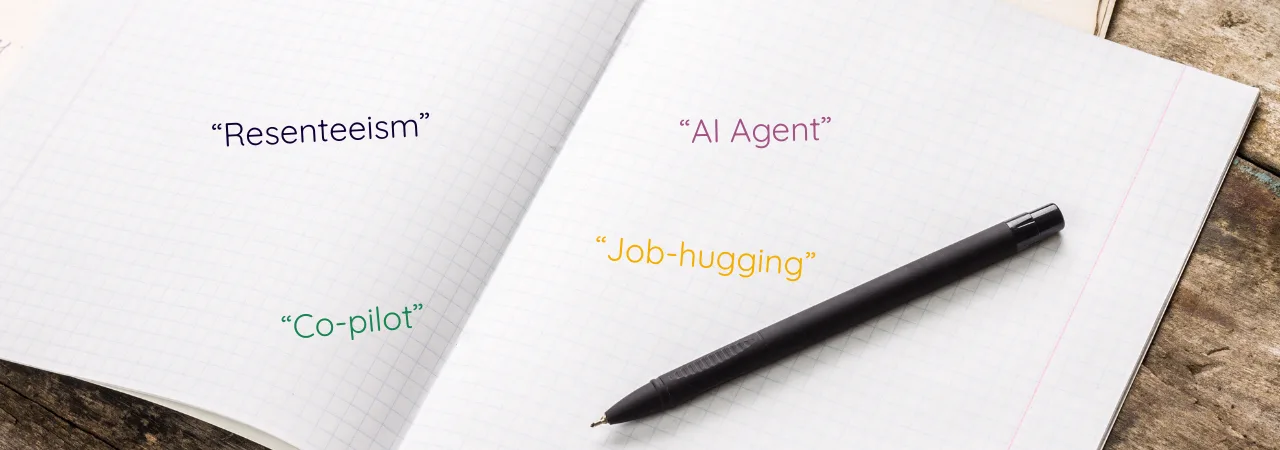
Here’s your quick glance buzzwords to add to your workplace lexicon:
If 2025 was the year we named the mess – resenteeism, coffee badging, bare minimum Mondays, 2026 is shaping up to be the year we’re judged on whether we’ve rebuilt the deal: fairer, more human, and genuinely worth showing up for.